
Why Is Your Retaining Wall Leaking or Bulging After the Spring Thaw?
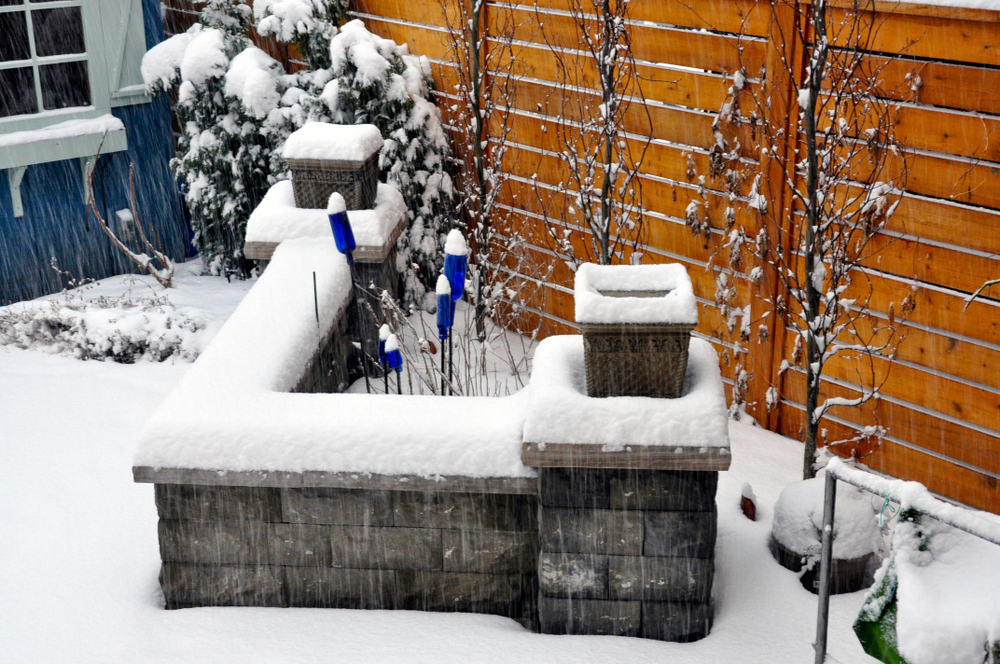
If you live in West Chazy, NY, or anywhere across Clinton County, you have likely stepped outside after a long winter and noticed something troubling about your retaining wall. Maybe it leans a little more than it did in October. Maybe water is seeping through cracks that were not there last fall. Maybe the base has shifted and the whole structure looks like it is holding its breath. This is not a coincidence, and it is not bad luck. It is the predictable result of what our region’s winters do to soil, stone, and drainage systems year after year. Understanding why it happens is the first step toward knowing when to call in professional hardscaping help before a cosmetic issue becomes a structural emergency.
What the Freeze-Thaw Cycle Does to Your Retaining Wall
The freeze-thaw cycle is one of the most destructive natural forces acting on any hardscape structure in northern New York. When water seeps into the soil or into the gaps between stones and blocks, it expands by roughly nine percent as it freezes. That expansion exerts enormous lateral pressure on whatever is containing it, and retaining walls bear the brunt of that force season after season.
In Clinton County, temperatures regularly swing from below freezing at night to above freezing during the day throughout late winter and early spring. Each one of those cycles adds a small amount of stress to your wall. A wall that has absorbed five or ten winters of freeze-thaw cycling without proper maintenance is carrying a significant amount of hidden structural fatigue. By the time the spring thaw arrives and the ground softens, that accumulated stress becomes visible as leaning, cracking, or bulging. Frost heave damage prevention is not simply a matter of building a sturdy wall once. It requires ongoing attention to drainage and soil conditions every single year.
Why Drainage Is the Root Cause of Most Retaining Wall Problems
Poor drainage is the single most common reason retaining walls fail in our region. A retaining wall is not just a decorative feature. It is a hydraulic structure designed to manage the movement of water as much as it manages the movement of soil. When stone wall drainage solutions are not properly integrated into a wall’s original construction, or when they become clogged with sediment and root material over time, hydrostatic pressure builds up behind the wall.
Hydrostatic pressure is the force that water exerts as it accumulates in saturated soil with nowhere to go. When water cannot drain through or under a wall, it pushes outward against the structure. Combined with the expansion forces of frozen ground, this pressure is often more than an aging wall can resist. Weep holes, gravel backfill, and perforated drain pipes are all components of a properly functioning drainage system, and any one of them failing can set off a chain reaction that ends with a collapsed or severely damaged wall.
If your retaining wall is leaking, it likely means water has found a path of least resistance through the structure itself. If it is bulging, water and frozen soil are pushing outward faster than the wall can resist. Both scenarios require prompt attention and a proper assessment of the drainage system before any surface repairs are attempted.
How to Recognize When a Wall Needs More Than Patching
Homeowners in West Chazy, NY, and throughout Clinton County often wonder whether a damaged wall can be patched or whether it needs to be partially or fully rebuilt. The answer depends on the extent of the underlying drainage failure and the degree of structural movement that has already occurred.
Hairline cracks in mortar joints are often a surface-level concern, especially if drainage is functioning and the wall has not shifted. Horizontal cracks running across the face of the wall, on the other hand, are a serious warning sign. They indicate that the wall is bending under pressure, which means the structural integrity of the entire section is compromised. Bulging that is visible to the naked eye from several feet away is also a sign that the situation has progressed beyond simple patching.
Retaining wall repair in these cases involves removing and resetting the affected sections, correcting the drainage behind the wall, and in some instances regrading the soil to reduce the long-term pressure on the structure. Attempting to apply surface patches without addressing the root cause is a short-term solution that typically fails within one to two additional freeze-thaw seasons.
The Role of Professional Hardscaping in Long-Term Wall Performance
This is where professional hardscaping becomes genuinely valuable rather than simply convenient. A trained hardscaping contractor understands the relationship between soil type, wall design, drainage engineering, and local climate patterns. In Clinton County, where winters are long and soil conditions vary considerably from one property to the next, that local knowledge makes a meaningful difference in how a repair is designed and executed.
Professional hardscaping teams approach retaining wall repair as a systems problem rather than a surface problem. They evaluate the existing drainage infrastructure, assess how much soil movement has occurred, identify what type of backfill was originally used, and determine whether the original wall design was appropriate for the slope and soil load it was asked to manage. In many cases, a wall that fails repeatedly has been repaired without addressing a fundamental design flaw that was present from the beginning.
Stone wall drainage solutions implemented by experienced contractors typically include proper gravel backfill, correctly sized and positioned weep holes, and in some cases the installation of a perforated drain pipe system that channels water away from the wall entirely. These are not cosmetic additions. They are structural necessities in a climate like ours, and skipping them is the reason so many walls in northern New York require repeated repairs.
When Spring Is the Right Time to Act
Spring is actually an ideal season for retaining wall repair, and not just because the damage becomes visible after the thaw. The softened ground is workable, the full extent of frost heave damage prevention needs can be assessed while conditions are still fresh, and any drainage corrections made in spring will be in place and functioning before the following winter’s freeze cycles begin.
Waiting until late summer or fall to address a visibly damaged wall is a common mistake. The wall may appear stable during the dry summer months, but the underlying drainage failure is still present, and the next freeze-thaw season will almost certainly make the problem worse. Addressing retaining wall repair in West Chazy, NY, and across Clinton County promptly in spring gives the repaired structure a full season to settle and stabilize before it faces another winter.
Conclusion
A leaking or bulging retaining wall after the spring thaw is not simply a cosmetic problem waiting to be painted over. It is a signal that your drainage system, your soil management, or your wall’s structural design needs attention from someone who understands how northern New York winters interact with hardscape structures. Frost heave damage prevention, proper stone wall drainage solutions, and expert retaining wall repair are all interconnected concerns that deserve a coordinated response. If you are seeing signs of movement or water infiltration in your wall this spring, do not wait another season to find out how much worse it can get. Reach out to a professional hardscaping team in Clinton County and give your wall the honest assessment it needs.
Need Landscapers in NY?
Welcome to Rand Hill Lawns, Inc.! We are a family-owned and -operated business that has served the Plattsburgh community since 1986. We are your go-to lawn care consultants! Whether you need landscaping, snow removal, excavating, paving, tree removal, stump removal, or fertilizer, we can do it all. We will not stop working until we get the job done for you! We are licensed and have 30 years of experience in lawn care services. Contact us today for a free estimate!
Categorised in: Hardscaping